While in college, I took courses in finite mathematics and calculus, earning an A in both. But finite mathematics came much more naturally to me. The best way I can explain the difference is through baseball. When a hitter struggles with a fastball, it can look like a pea coming toward the plate. For the best hitters, that same fastball can look as big as a basketball. Finite mathematics was my basketball. I could see the numbers, understand their relationships, and work through problems almost instinctively.
Finite mathematics deals with quantities we can count, organize, and compare. Calculus examines how those quantities change and how different variables influence one another over time. Both are useful, but understanding the full cost of pharmacy benefits requires more than calculating discounts and measuring performance against contractual guarantees. Employers must understand how price, utilization, drug mix, and member cost share interact to influence spending. A program can meet its pricing guarantees while total costs rise, or miss a guarantee while delivering a substantial reduction in spending. Understanding the difference is where meaningful oversight begins.
What the Numbers Reveal
After we submitted a proposal to a brokerage firm, a senior leader questioned why we had included cost per member per month, or PMPM. His reaction surprised me. We were proposing a pharmacy benefit and PMPM helped explain its financial impact relative to the population being covered. Including it seemed fundamental. That conversation illustrated how deeply our industry’s evaluation process centers on pricing terms, even when the employer’s objective is to understand and manage the cost of the benefit.
A second experience made the distinction even clearer. A partner at a brokerage firm shared a performance review following a new client’s first three months with us. We had met all but one contractual guarantee, falling short on 30 day retail brand prescriptions. The initial exchange did not include total cost or PMPM, so I brought the spending trend into the discussion.
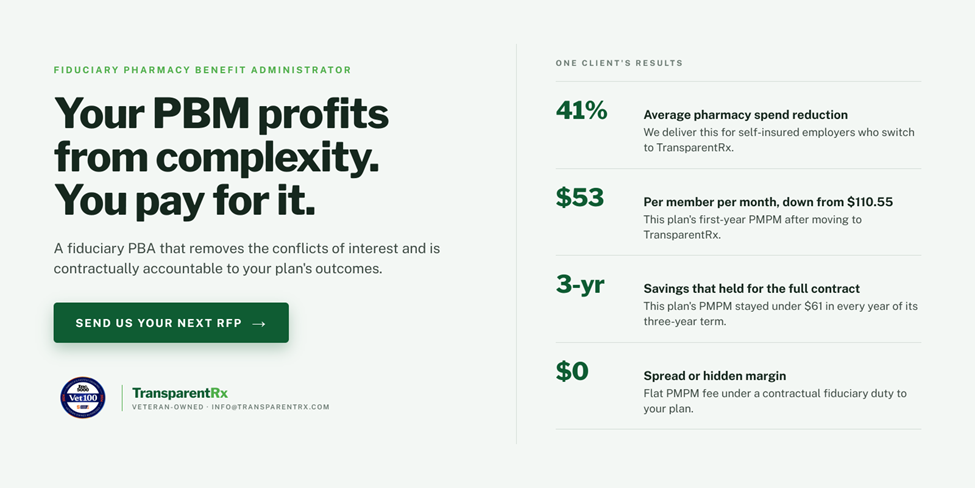
The incumbent PBM’s year end cost was approximately $120 PMPM. By June, reported monthly cost under our program had fallen to approximately $51 PMPM, about 57 percent below that baseline. Those figures excluded administration fees and rebates, so they were not a complete measure of net cost. They were nevertheless a significant part of the financial picture.
The missed guarantee deserved attention. A provider should be accountable for its contractual commitments regardless of the overall financial outcome. But an assessment that highlighted the shortfall without examining the spending trend would have been incomplete. The partner agreed that the broader financial result mattered and also asked about the member experience. That conversation appropriately expanded to consider whether the promised pricing had been delivered, how costs were changing, and what members were experiencing.
Four Factors That Shape Cost
Brokers and consultants are good at measuring performance against guarantees because the exercise is finite. There is a target, an actual result, and a difference between them. Evaluating cost requires a broader analysis of four factors:
- Price: What is paid for each prescription.
- Utilization: How much medication members use.
- Drug mix: Which medications members use, including the balance among generic, brand, and specialty drugs.
- Member cost share: How the expense is divided between the employer and its members.
A stronger discount can be offset by a more expensive drug mix, while higher member cost share can lower employer spending without reducing total cost. Recognizing those relationships takes more than access to a report. It requires ongoing education and the ability to interpret the data, question assumptions, and distinguish a pricing improvement from an improvement in overall cost. Employers should expect their advisors to bring that depth of understanding to every review.
A Clear Standard for Executive Review
Meaningful comparisons require consistent definitions. Every review should specify whose spending is measured, how administration fees and rebates are treated and whether the covered population has changed. It should also distinguish a monthly spending trend from savings measured across a full quarter or year. Those details give executives a sound basis for judging the result.
Require every pharmacy benefits review to answer three questions: Did the provider meet its guarantees? What happened to total cost and PMPM? What drove the result? Hold providers accountable for their pricing commitments and for explaining the financial outcome. Until all three questions are answered, the review is incomplete.