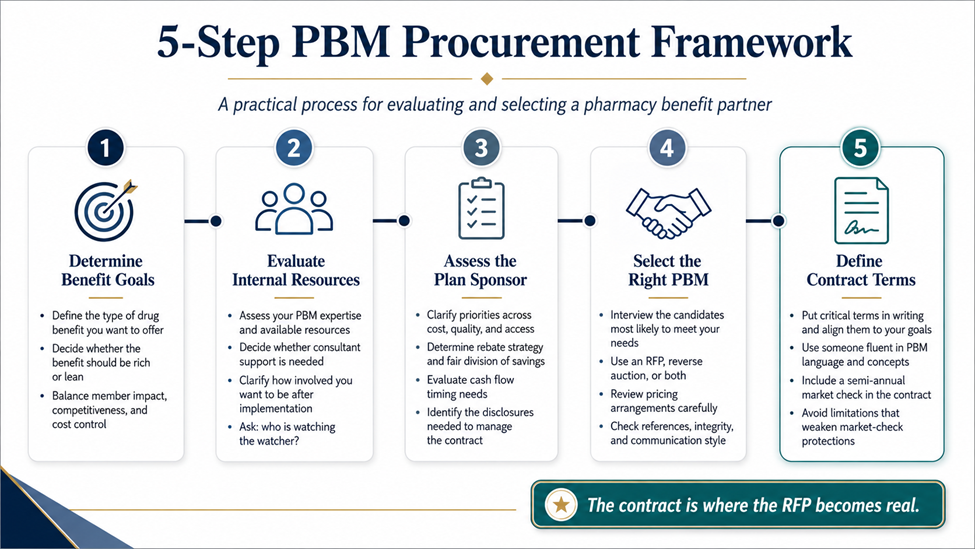
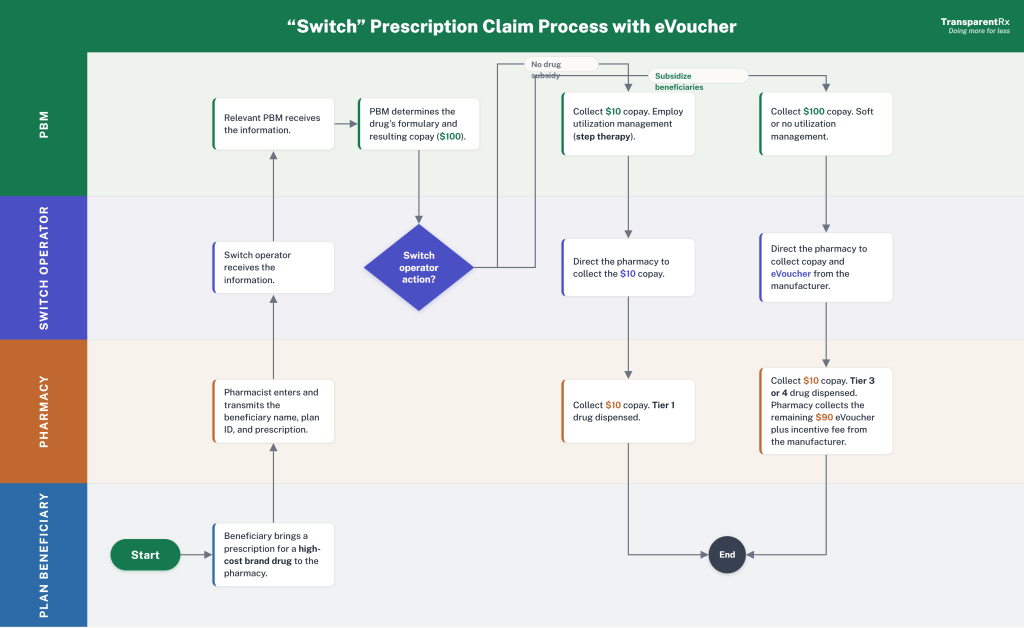
The Definition of Oversee: to watch over and direct (an undertaking, a group of workers, etc.) in order to ensure a satisfactory outcome or performance.
Self-funded employers operate under a prudent expert standard. The Consolidated Appropriations Act raised the bar. A good faith effort is not enough. Plan fiduciaries must understand what they are buying, what they are paying, and whether the arrangement serves participants, not intermediaries. A practical fiduciary checklist is not theoretical. It is operational.
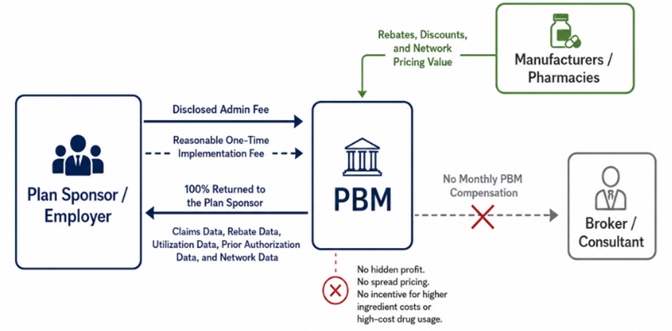
Confirm true independence. Require written disclosure of all direct and indirect compensation paid to your PBM and your consultant. Indirect revenue, side agreements, rebate aggregators, and affiliated entities matter. If your advisor receives compensation from a PBM, you do not have a buyer’s agent. You have a seller’s agent. Replace conflicted vendors if necessary.
Define value before you define rebates. Rebates are not value. Net cost by drug class, appropriateness, waste reduction, and total cost of care are value. Demand reporting that shows ingredient cost, dispensing fee, member cost share, and all manufacturer revenue tied to your utilization. If you cannot see the full economics at the claim level, you cannot meet a fiduciary standard.
Control the formulary. Your PBM’s P&T committee is not automatically aligned with you. Vertical integration and rebate-driven placement can bias decisions toward high-list-price drugs. Require a value-based formulary that prefers generics and biosimilars when clinically appropriate. Prohibit favoring a higher list price drug solely because it generates a larger rebate. Demand quarterly formulary updates and written justification for material changes.
Download the Checklist
Tighten utilization management. Prior authorization approval rates north of 90 percent signal process failure. Protocols should be clinically grounded, documented, and consistently applied. Prohibit off-label expansion designed to increase rebate flow. Insist on reporting that shows approval rates, step therapy compliance, and exception patterns by drug class. Own the data. You must have full access to claims files, historical data, and rebate invoices. Require clear identifiers for 340B claims, specialty drugs, MAC pricing, coupon usage, and exclusions from guarantees. If you cannot independently reprice claims, conduct market checks, and audit rebate agreements, you are relying on representations, not evidence.
Eliminate guarantee games. Forbid offsets where overperformance in one guarantee masks underperformance in another. Define rebates broadly to include all manufacturer payments, not just what the PBM chooses to label as a rebate. Close loopholes tied to definitions of generic, specialty, or excluded drugs.
Audit aggressively. Retain an independent auditor with unrestricted access to contracts, pharmacy records, and rebate agreements. No blackout periods. No PBM veto over auditor selection. Annual audits should assess pricing, rebate pass-through, formulary compliance, and contract adherence.
Separate 340B economics. Require separate identification and pricing treatment of 340B claims. Do not allow inflated list pricing to persist without rebate offset. If 340B savings are not passed through, you are subsidizing intermediaries.
Fiduciary governance in pharmacy benefits is not about squeezing another basis point from a discount off AWP. It is about knowledge. Knowledge of definitions. Knowledge of financial flows. Knowledge of clinical appropriateness.
If you do not understand the mechanics, you cannot discharge the duty. If you do understand them, you can realign the system to serve the only constituency that matters: your plan participants.
How to Know If You Are Falling Short
This checklist is a governance test. Missing one item may signal a process gap. Missing two or three signals exposure. If the gaps are administrative, such as delayed reporting or incomplete benchmarking, you likely have an operational weakness that can be corrected.
If the gaps involve financial transparency, audit rights, data ownership, conflicted compensation, or formulary control, the risk is structural. These are not minor deficiencies. They directly affect whether plan assets are being managed solely in the interest of participants, as required under a prudent expert standard.
You should assume you are out of alignment if:
You cannot document every source of PBM and consultant compensation tied to your plan.
You do not have full audit rights, including access to rebate agreements and subcontractors.
You cannot independently reprice claims or validate net cost by drug class.
You permit guarantee offsets that mask underperformance.
You rely on your PBM’s formulary decisions without independent review.
Two or three misses in these areas are not cosmetic. They mean you cannot verify alignment. And if you cannot verify alignment, you cannot demonstrate prudent oversight. The practical rule is simple: If a gap limits transparency or independence, treat it as a fiduciary risk until corrected. Gaps become failures only when they are ignored.
How We Can Work Together
Whether you’re a plan sponsor trying to get control of pharmacy spend, or a broker guiding clients through PBM decisions, education is the fastest way to improve outcomes. If you want a focused, high-value session your team can actually use, here are several ways we can work together.
American College of Benefit Specialists (ACoBS) equips benefits professionals with practical knowledge across pharmacy, medical, retirement, and voluntary benefits. Organizations working with ACoBS-certified consultants gain better plan oversight, stronger vendor accountability, and more disciplined cost control. The certification signals a clear commitment to fiduciary guidance and protecting plan assets.
A clean, educational session for employers, brokers, or TPAs. We’ll cover the most common PBM profit tactics, how to spot contract red flags, and what a fiduciary standard of care looks like in pharmacy benefits. Great for client education and thought leadership.
Bring your internal team (HR, Finance, and Benefits) or your broker group. I’ll lead a live discussion focused on PBM oversight, cost drivers, and what to ask your PBM right now. You’ll leave with a short action list you can use immediately.
Pharmacy benefits now rival medical spend for many plans. Yet most are still governed by contracts few have fully read and pricing models few can clearly explain. That is a fiduciary risk, not just a cost issue.
If you want lower spend, tighter oversight, and alignment you can defend in front of a board or audit committee, act with intent. Certify your team. Educate your clients. Pressure test your PBM. Run an RFP that exposes the full economics.
Hope is not a strategy. Oversight is. The employers who win in pharmacy benefits are not lucky. They are informed, disciplined, and unwilling to outsource accountability.
If you are a self-funded employer, your health plan is the payer of last resort. Every hidden spread, every rebate-driven formulary choice, every “mandatory” specialty pharmacy shift, every opaque fee that is not clearly defined in writing comes out of plan assets. That is money you could have used to lower contributions, avoid benefit cuts, or invest in people.
The conflict problem is not theoretical. Federal and state findings describe a market that is both highly concentrated and heavily vertically integrated. The Federal Trade Commission’s interim staff report found the top three PBMs processed nearly 80 percent of U.S. prescriptions in 2023 and the top six processed more than 90 percent, with the largest PBMs integrated into insurers and pharmacies (1). The same FTC report found PBM-affiliated pharmacies account for nearly 70 percent of specialty drug revenue and documented two specialty-generic case studies where PBM-affiliated pharmacies were often paid 20 to 40 times the National Average Drug Acquisition Cost (NADAC), with nearly $1.6 billion in dispensing revenue above NADAC for those two drugs (2020 through part of 2022).
Regulators are now putting “fiduciary standard of care” into the PBM conversation in a way that self-funded employers have wanted for years. In early 2026, DOL proposed a PBM fee disclosure rule under ERISA section 408(b)(2) designed to force disclosure of direct and indirect compensation and to give plan fiduciaries audit rights (2). In February 2026, Congress enacted the Consolidated Appropriations Act, 2026 (Public Law 119-75), adding major PBM oversight and transparency provisions for group health plans and, critically, wiring 100 percent pass-through of “rebates, fees, alternative discounts, and other remuneration” into ERISA plan contracting standards on a defined timeline (3).
Why self-funded employers become the “payer of last resort”
Self-funded plans do not “buy insurance” for the pharmacy benefit in the way fully insured groups do. They fund claims. That makes PBM incentives a governance issue, not just a procurement issue.
ERISA already expects plan fiduciaries to understand what service providers are paid and to ensure compensation is reasonable. In 2014, the ERISA Advisory Council examined whether PBMs should be required to disclose fees and compensation so plan sponsors could meet ERISA’s “reasonable compensation” expectations under section 408(b)(2) (4). Twelve years later, DOL’s 2026 proposed rule is basically the government acknowledging the obvious: PBM compensation is complex, can come from multiple directions, and is difficult for fiduciaries to evaluate without standardized disclosure and audit rights (5).
A second layer that self-funded employers often underestimate is the broker/consultant channel. A STAT investigation reported that some consulting firms may be paid by PBMs on a per-prescription basis, with sources describing at least $1 per prescription and up to $5 per prescription in extreme cases, plus other forms of compensation. Whether every allegation in the market pans out is almost beside the point: if your advisor is compensated by the entity they are supposed to challenge, it weakens your fiduciary posture and your negotiating leverage. “Vendor selection” becomes “vendor placement.”
If your PBM, your broker, or your consultant cannot give you a clean compensation story in writing, they are not operating at a fiduciary standard of care. They are operating at a sales standard.
The conflict map: how PBMs make money and how each conflict hits employers
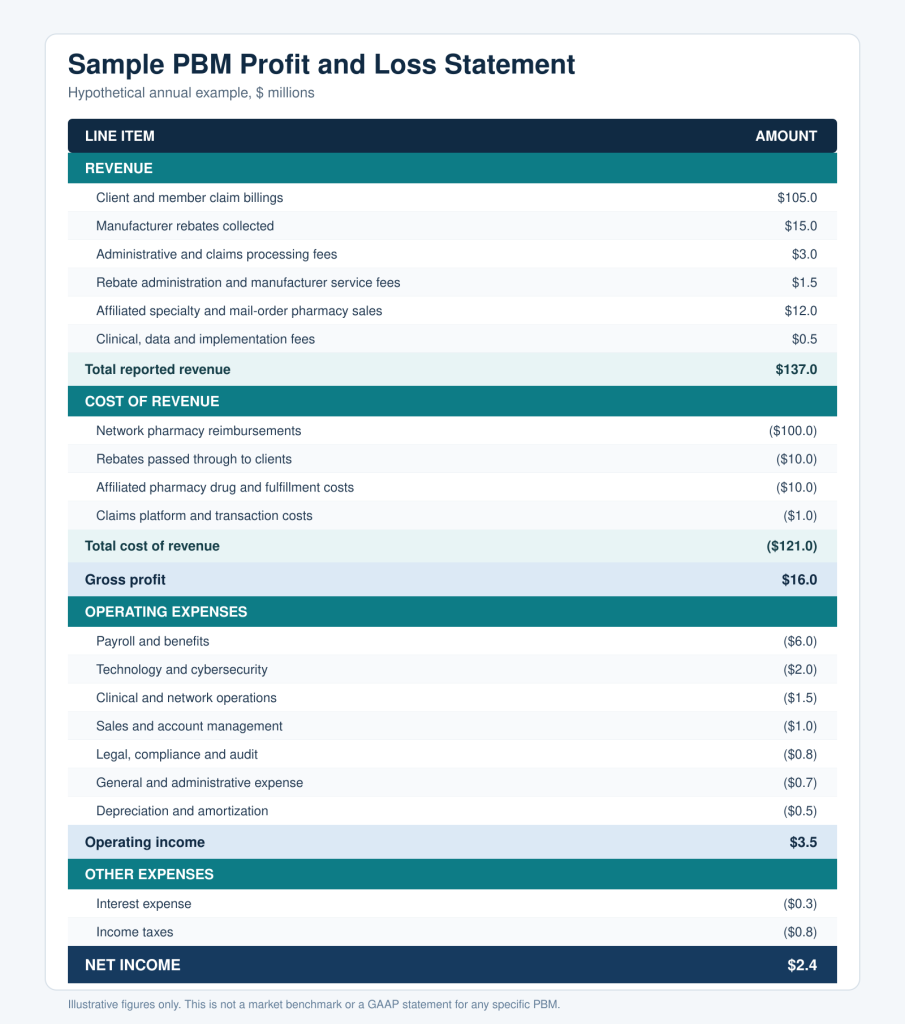
PBMs offer real services: network contracting, claims adjudication, formularies, utilization management, and rebate negotiation. The problem starts when the PBM’s profit depends on decisions that make the plan spend more, not less.
To keep this practical, here are the main conflict types you asked for, framed as “what it is,” “how the PBM wins,” and “how the self-funded employer loses.”
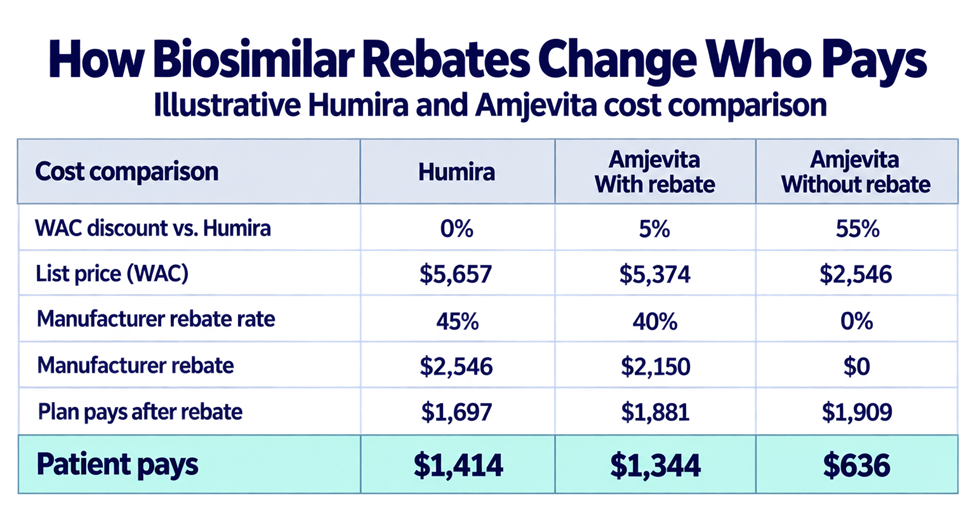
Rebate steering and rebate-driven formularies: manufacturers pay rebates and fees tied to formulary placement and market share. Those arrangements can reward high list prices and large rebates rather than low net cost. The FTC has warned that rebate and fee agreements used to secure exclusion of lower-cost products may incentivize steering to higher-cost drugs and block competition from cheaper generics and biosimilars (6). A self-funded employer loses twice: higher gross ingredient cost today, and a plan design reality where members’ deductibles/coinsurance are often based on gross prices, not net prices after rebates.
Formulary control as a profit center: formulary placement is not just “clinical.” It is a pricing lever. Economic research on rebate contracting and formulary design shows how formulary position can be traded for rebate value, which means the PBM’s “preferred drug” is not automatically the plan’s lowest net option (7). Employers get marketing language about “rebate guarantees” and “discounts,” but the real harm shows up in which drugs get preferred tier status and which lower-cost competitors get boxed out.
Spread pricing: spread is the margin between what the plan (or its carrier/TPA) pays the PBM and what the PBM reimburses the pharmacy. State audits show how large this can be in public programs. Ohio’s Auditor found total spread of $224.8 million in a 12-month period (Apr 2017–Mar 2018), with generic spread representing 31.4 percent of amounts paid for generics in that dataset (8). Kentucky’s “Opening the Black Box” report found PBMs were paid $957.7 million through MCOs for spread-pricing contracts in CY2018, with $123.5 million (12.9 percent) not paid to pharmacies and kept by PBMs as spread (9). Self-funded employers should treat these as warnings because the same mechanics exist in commercial contracts, just with fewer public audit rights.
PBM ownership of specialty pharmacies and specialty steering: vertical integration turns “benefit management” into self-preferencing. The FTC found PBM-affiliated pharmacies now account for nearly 70 percent of specialty drug revenue, and documented steering mechanisms and pricing outcomes that favor affiliated channels (1). When the PBM owns the specialty pharmacy, the plan is effectively negotiating with a party that can move volume to itself and capture dispensing margin. As one industry benefits leader put it, the Big 3 control both the “rebate pipeline” and the “utilization pipeline,” creating a closed loop.
Gag clauses and “clawbacks” at the pharmacy counter: historically, some contracts limited pharmacists from telling patients when a cheaper cash price existed. Congress passed two laws in 2018 aimed at banning gag clauses in private plans and Medicare, reflecting the view that these restrictions caused overpayment at the point of sale (10). Even after gag clause bans, disputes continue around cost-sharing that can exceed the pharmacy’s negotiated price. In Negron v. Cigna/OptumRx litigation, plaintiffs alleged schemes where insureds were charged more than the negotiated amounts and excess money was remitted back, described as “clawbacks.” (11) For self-funded employers, this is not just member pain. It can increase overall plan costs and trigger fiduciary litigation risk when participants claim the plan allowed unjustified pricing.
Opaque “pass-through” promises and hidden remuneration: “pass-through” is often marketed as “we pass rebates.” In reality, compensation can show up as many categories: manufacturer admin fees, data fees, pharmacy DIR-like fees/recoupments, spread on specific channels, price protection terms, rebate aggregation retained amounts, and affiliate payments. DOL’s Jan 2026 fact sheet explicitly calls out categories like spread compensation, pharmacy clawbacks, and price protection arrangements as reportable compensation categories, and proposes audit rights so fiduciaries can verify accuracy (12). The DOL proposal also notes concerns about rebate aggregators/GPOs formed outside the U.S. and the need to capture compensation flowing to “agents” that do not fit neat affiliate/subcontractor definitions (5).
A simple visual of where conflicts show up in a typical commercial flow is below. It matches the structure described in state Medicaid reporting and federal discussions, even though the exact contract terms vary widely.
Diagram 1: Where conflicts show up in a typical commercial flow
What the public record shows: quantified impacts, lawsuits, enforcement
The data problem for employers is that the strongest transparency is often found in government audits and enforcement, not in commercial PBM sales decks. Still, the public record has enough signal to justify hard questions in every RFP and renewal.
The dollars are concentrated where conflicts pay: in Ohio’s Medicaid managed care audit period, generics were 86.1 percent of claims but only 26.2 percent of spend, while brand drugs were 13.4 percent of claims but 49.3 percent of spend, and specialty was 0.5 percent of claims but 24.4 percent of spend (8). That pattern is why rebate-driven and specialty steering conflicts matter so much in employer plans too.
The chart above uses Ohio Medicaid managed care (Apr 2017–Mar 2018) because it is audited and publicly documented. It should not be treated as your plan’s exact mix, but it is a useful reminder that “generic discounts” are not where most dollars sit.
Spread can be massive when it exists. In Ohio, the Auditor’s table shows $224.8 million in total spread over that 12-month period, with $208.4 million of spread on generics alone. In Kentucky CY2018, PBMs reported $123.5 million in spread (12.9 percent) on $957.7 million paid through MCO spread contracts. These are not “rounding errors.” They are business model revenue.
The FTC’s specialty-generic case studies show another way the money leaks: dispensing margins at PBM-affiliated pharmacies that can dwarf what employers assume is “reasonable.” The interim staff report states PBM-affiliated pharmacies were often paid 20 to 40 times NADAC for the two case study drugs, and retained nearly $1.6 billion in dispensing revenue in excess of NADAC (2020 through part of 2022).
Litigation and enforcement are now explicitly tying rebating practices to inflated list prices and restricted access. In September 2024, the FTC sued the three largest PBMs and their affiliated GPOs alleging anticompetitive and unfair rebating practices that inflated insulin list prices and impaired access to lower list-price products (13). In February 2026, the FTC announced a settlement with Express Scripts requiring major business practice changes and projecting up to $7 billion in out-of-pocket savings over 10 years (14). The FTC framed this as patient relief, but for self-funded employers, “out-of-pocket” is only one part of the story. A pharmacy claim has a plan-paid portion too, and insulin is routinely a material spend category in large plans.
The employer fiduciary risk is rising alongside enforcement. In March 2025, plan participants filed an ERISA class action against JPMorgan alleging mismanagement of prescription drug benefits and inflated drug prices tied to PBM contracting and oversight failures (15). Courts are also publishing decisions that outline how PBM-related pricing disputes get framed under ERISA, even when cases are dismissed on standing grounds.
You do not want your “PBM oversight program” to be invented for you by the plaintiffs’ bar. Build it now, document it, and tie it to a fiduciary standard of care.
Regulation and enforcement: where the ground is shifting
A lot has happened fast, and it is not going back to the old “trust us, it’s proprietary” era. Key federal moves affecting self-funded employers include:
State authority to regulate PBMs has expanded in practical terms since Rutledge v. PCMA (2020), where the Supreme Court held Arkansas’s PBM law was not preempted by ERISA.
Congress banned gag clauses in 2018 for private plans (Patient Right to Know Drug Prices Act, Public Law 115–263) and for Medicare (Know the Lowest Price Act, Public Law 115–262).
ERISA compensation disclosure for group health plan brokers and consultants was added via the Consolidated Appropriations Act, 2021, with DOL guidance in Field Assistance Bulletin 2021-03.
FTC launched its 6(b) study in 2022 and expanded orders to rebate aggregators/GPOs in 2023.
FTC’s July 2024 interim staff report put vertical integration, specialty steering, and rebate-driven competition issues into a single federal narrative.
DOL’s January 2026 proposed PBM fee disclosure rule under ERISA 408(b)(2) is designed to force upfront and semiannual disclosure of PBM compensation and give fiduciaries audit rights.
The Consolidated Appropriations Act, 2026 (Public Law 119-75) created a new statutory framework for PBM oversight and reporting to group health plans, with semiannual reporting and the ability to request quarterly reports in certain cases.
The same 2026 law also hard-wires a 100 percent pass-through standard into ERISA reasonableness for PBM contracting, requiring PBMs to remit 100 percent of “rebates, fees, alternative discounts, and other remuneration” related to utilization or drug spending under the plan, subject to the law’s effective-date structure.
Diagram 2: Timeline of major investigations, litigation, and rulemaking (US-focused)
The takeaway for self-funded employers: the “fiduciary standard of care” is becoming enforceable expectations, not marketing language. DOL’s proposed rule and the 2026 statute both treat PBM compensation and data access as fiduciary essentials, not optional add-ons.
Prioritized Sources
Top primary and official sources used (ordered by practical importance for a self-funded employer fiduciary):
Whether you’re a plan sponsor trying to get control of pharmacy spend, or a broker guiding clients through PBM decisions, education is the fastest way to improve outcomes. If you want a focused, high-value session your team can actually use, here are several ways we can work together.
American College of Benefit Specialists (ACoBS) equips benefits professionals with practical knowledge across pharmacy, medical, retirement, and voluntary benefits. Organizations working with ACoBS-certified consultants gain better plan oversight, stronger vendor accountability, and more disciplined cost control. The certification signals a clear commitment to fiduciary guidance and protecting plan assets.
A clean, educational session for employers, brokers, or TPAs. We’ll cover the most common PBM profit tactics, how to spot contract red flags, and what a fiduciary standard of care looks like in pharmacy benefits. Great for client education and thought leadership.
Bring your internal team (HR, Finance, and Benefits) or your broker group. I’ll lead a live discussion focused on PBM oversight, cost drivers, and what to ask your PBM right now. You’ll leave with a short action list you can use immediately.
Pharmacy benefits now rival medical spend for many plans. Yet most are still governed by contracts few have fully read and pricing models few can clearly explain. That is a fiduciary risk, not just a cost issue.
If you want lower spend, tighter oversight, and alignment you can defend in front of a board or audit committee, act with intent. Certify your team. Educate your clients. Pressure test your PBM. Run an RFP that exposes the full economics.
Hope is not a strategy. Oversight is. The employers who win in pharmacy benefits are not lucky. They are informed, disciplined, and unwilling to outsource accountability.
Channel management is one of the most overlooked levers in pharmacy benefit design. Too many plans fixate on unit cost or rebates while ignoring where drugs are dispensed and who controls the economics. Channels are not neutral. Each one carries its own incentives, risks, and transparency gaps. When employers fail to manage channels deliberately, PBMs manage them instead.
Retail Pharmacy. Retail pharmacies remain the front door for most members. They offer convenience and access, but they also hide significant pricing variation. Employers should manage retail through narrow or preferred networks tied to transparent reimbursement benchmarks, not inflated AWP formulas. PBMs should pay pharmacies using fully disclosed ingredient costs and fixed dispensing fees. Employers must eliminate spread pricing and require claim-level audit rights. Retail becomes cost-effective only when the plan sponsor controls network design and pricing rules.
Mail Order. PBMs often position mail order as a savings tool, but they frequently use it as a profit center. The channel itself is not the issue. Oversight is. Employers should treat mail order as an option, not a mandate, and apply the same transparent pricing logic used in retail. Plan sponsors should require disclosure of acquisition cost, prohibit auto-refill without member consent, and tie guarantees to adherence and waste reduction. Mail order works only when it serves members instead of maximizing PBM margin.
Source: Three Axis Advisors
Specialty Pharmacy. Specialty drives the fastest growth in pharmacy spend and attracts the most aggressive channel manipulation. PBMs steer volume to affiliated specialty pharmacies, restrict distribution, and rebrand identical drugs to protect margins. Employers should manage specialty as a clinical channel first. They should demand open pricing, visibility into manufacturer assistance, and full disclosure of ownership relationships. Site-of-care optimization, dose management, and outcomes reporting matter more than rebate yields. True transparency means knowing the net cost per drug therapy.
340B. The 340B channel introduces complexity and frequent conflicts of interest. While it can reduce costs in certain scenarios, it often shifts margin to covered entities and contract pharmacies instead of employers. Plan sponsors should not assume savings. They should require claim-level identification, clear contracts, and defined savings allocation. When employers pay commercial prices while others retain the spread, the program creates leakage, not value.
International Sourcing. International sourcing now plays a legitimate role for select maintenance medications. When executed correctly, it delivers meaningful savings. Employers should govern this channel tightly, limit it to FDA-compliant pathways, and communicate clearly with members. International sourcing should complement domestic options, not replace them. Employers must understand which drugs qualify and where savings actually flow.
Other Channels Worth Attention. Direct-to-employer and cost-plus pharmacy models reduce intermediaries and improve price visibility, especially for generics. They do not solve every problem, but they belong in a fiduciary strategy. White bagging and brown bagging also demand attention. Employers should treat them as intentional channel decisions tied to site-of-care strategy, not operational afterthoughts.
The takeaway is simple. Channel management requires fiduciary discipline. Employers must align incentives, eliminate hidden margins, and maintain clear line-of-sight into every pharmacy dollar. Transparency is not a feature added later. It is the standard from day one.
How We Can Work Together
Whether you’re a plan sponsor trying to get control of pharmacy spend, or a broker guiding clients through PBM decisions, education is the fastest way to improve outcomes. If you want a focused, high-value session your team can actually use, here are several ways we can work together.
American College of Benefit Specialists (ACoBS) equips benefits professionals with practical knowledge across pharmacy, medical, retirement, and voluntary benefits. Organizations working with ACoBS-certified consultants gain better plan oversight, stronger vendor accountability, and more disciplined cost control. The certification signals a clear commitment to fiduciary guidance and protecting plan assets.
A clean, educational session for employers, brokers, or TPAs. We’ll cover the most common PBM profit tactics, how to spot contract red flags, and what a fiduciary standard of care looks like in pharmacy benefits. Great for client education and thought leadership.
Bring your internal team (HR, Finance, and Benefits) or your broker group. I’ll lead a live discussion focused on PBM oversight, cost drivers, and what to ask your PBM right now. You’ll leave with a short action list you can use immediately.
When a PBM change is on the table, the RFP process should surface more than just headline pricing. We participate in RFPs to provide full transparency into costs, guarantees, and alignment so plan sponsors can make informed, defensible decisions.
Choose your option to get clear, fiduciary guidance your team can rely on for pharmacy benefits decisions this week.
Most people involved in benefit governance assume a basic safeguard exists in pharmacy benefits: if a drug adjudicates through the PBM system and carries a National Drug Code, it must be FDA approved. That assumption feels reasonable, but it is incorrect. Federal law requires that prescription drugs marketed and sold in the United States be approved by the FDA for safety and effectiveness under the Food, Drug, and Cosmetic Act (1). Drugs that bypass that process are considered illegally marketed, even if they appear in commercial drug databases or process cleanly through PBM claim systems. The FDA has been explicit that assignment of an NDC does not indicate FDA approval (2).
Despite this, unapproved drugs continue to be paid for by both public and private health plans. This is not a theoretical concern or a fringe compliance issue. It is a documented pattern that persists largely because it remains invisible within traditional PBM reporting, eligibility rules, and audit frameworks.
A federal oversight review by the U.S. Department of Health and Human Services Office of Inspector General found that Medicaid reimbursed for hundreds of drugs that were not FDA approved in a single year, totaling tens of millions of dollars (3). The same review identified additional drugs where approval status could not be confirmed due to gaps or inconsistencies in FDA listings, creating further exposure. Medicaid operates with statutory definitions, rebate oversight, and federal review requirements. Commercial and self-funded plans operate with far fewer guardrails.
This is where the issue becomes relevant for brokers, consultants, benefit directors, and steering committees. PBMs rely on third-party drug compendia and manufacturer-submitted data to determine claim eligibility. Inclusion in those systems does not equal FDA approval. The FDA has repeatedly warned that many unapproved drugs carry NDCs and continue to be marketed, prescribed, and dispensed without having undergone FDA review for safety, effectiveness, manufacturing quality, or labeling accuracy (4).
The persistence of this issue is not hard to explain. In the traditional PBM model, no party is contractually required to verify FDA approval status at the claim level. Most PBM agreements are silent on it. Most audits never test for it. Most plan fiduciaries are never told it exists as a risk. Claims adjudicate as expected, reports reconcile, and the assumption of compliance goes unchallenged.
When plans do look, the findings are consistent. Independent audits and compliance reviews across employer plans, unions, and public entities routinely identify a small but meaningful percentage of claims tied to non-FDA-approved drugs. This is often confused with the separate reality that high-cost specialty medications drive a disproportionate share of pharmacy spend. Those are not the same issue. Specialty drugs account for the familiar statistic that one to two percent of prescriptions can drive thirty to forty percent of total drug spend. Non-FDA-approved drugs usually represent a smaller dollar amount, but they introduce a different and more fundamental risk.
FDA Drug Approval Pathways Guide
From a patient safety perspective, these drugs have not been reviewed by the FDA for clinical effectiveness, manufacturing standards, or accurate labeling. The agency has documented cases of patient harm tied to unapproved drugs and has stated clearly that their continued marketing poses public health risks (4). From a compliance standpoint, federal law prohibits introducing unapproved drugs into interstate commerce, and public programs define covered outpatient drugs as those approved by the FDA, with narrow statutory exceptions (1, 5).
There is also a fiduciary dimension that benefit committees should not dismiss. Once a plan sponsor becomes aware that its pharmacy benefit may include drugs that should not legally be marketed or reimbursed, continued reliance on a PBM process that does not address that risk becomes harder to defend under a prudent oversight standard. This is not about intent. It is about governance and reasonable controls once the issue is known.
This is not an indictment of PBMs. It is an acknowledgment of a longstanding blind spot in pharmacy benefit oversight. PBMs adjudicate claims based on the rules and eligibility criteria they are given. If FDA approval status is not part of those rules, it is not checked. That gap persists unless plan sponsors and their advisors insist on closing it.
For benefit professionals advising fiduciary committees, the takeaway is straightforward. FDA approval should not be assumed. It should be verified. If a PBM cannot clearly explain how it identifies and excludes non-FDA-approved drugs, that is not a technical oversight. It is a governance gap with legal, financial, and patient safety implications. Ignoring the issue does not make the exposure disappear. It only ensures that when the question is eventually raised, the answer will be uncomfortable.
Whether you’re a plan sponsor trying to get control of pharmacy spend, or a broker guiding clients through PBM decisions, education is the fastest way to improve outcomes. If you want a focused, high-value session your team can actually use, here are several ways we can work together.
American College of Benefit Specialists (ACoBS) equips benefits professionals with practical knowledge across pharmacy, medical, retirement, and voluntary benefits. Organizations working with ACoBS-certified consultants gain better plan oversight, stronger vendor accountability, and more disciplined cost control. The certification signals a clear commitment to fiduciary guidance and protecting plan assets.
A clean, educational session for employers, brokers, or TPAs. We’ll cover the most common PBM profit tactics, how to spot contract red flags, and what a fiduciary standard of care looks like in pharmacy benefits. Great for client education and thought leadership.
Bring your internal team (HR, Finance, and Benefits) or your broker group. I’ll lead a live discussion focused on PBM oversight, cost drivers, and what to ask your PBM right now. You’ll leave with a short action list you can use immediately.
When a PBM change is on the table, the RFP process should surface more than just headline pricing. We participate in RFPs to provide full transparency into costs, guarantees, and alignment so plan sponsors can make informed, defensible decisions.
Choose your session type and reserve your date to get clear, fiduciary guidance your team can rely on for pharmacy benefits decisions this week.
Obesity drugs are back in the spotlight, and not because people suddenly discovered willpower. It’s because the newer GLP-1 and dual GLP-1/GIP medications have changed what’s medically possible for weight loss. Semaglutide (Wegovy) and tirzepatide (Zepbound) are producing results closer to bariatric surgery outcomes than anything most employers have seen from traditional weight management programs. For self-funded employers, the real question isn’t “Do these drugs work?” It’s “What happens to our plan when demand explodes?”
That’s where ICER’s new final report on semaglutide and tirzepatide for obesity matters. ICER, the Institute for Clinical and Economic Review, is an independent nonprofit that evaluates treatments using a public, evidence-based process that weighs clinical outcomes and cost side-by-side. In this review, ICER evaluated injectable semaglutide 2.4 mg, oral semaglutide 25 mg (still under review for obesity), and tirzepatide 15 mg for adults with obesity who do not have diabetes. They also bring the evidence to an independent advisory council (NE CEPAC) for public votes on comparative benefit and value.
On the clinical side, ICER’s takeaway was clear: these drugs deliver meaningful outcomes when added to lifestyle intervention. In the trial evidence ICER summarized, tirzepatide produced an average 17.8% greater weight loss than placebo, injectable semaglutide produced 13.1% greater weight loss than placebo, and oral semaglutide produced 11.4% greater weight loss than placebo. Tirzepatide also outperformed semaglutide in a head-to-head trial, with a 20.2% reduction in body weight vs. 13.7% for semaglutide at week 72. Weight loss is what gets the headlines, but employers care about what this changes downstream.
ICER highlighted cardiovascular outcomes that connect obesity treatment to fewer catastrophic claims. In the SELECT trial population (adults with obesity and established cardiovascular disease), injectable semaglutide reduced major adverse cardiovascular events by 20% and reduced all-cause mortality. Once a drug category starts showing fewer heart attacks and fewer deaths in the right population, it stops being viewed as a cosmetic category and starts looking like cardiometabolic care.
A visual representation of ICER’s new final report on semaglutide and tirzepatide anti-obesity medications
ICER’s evidence ratings reinforced that shift. They rated injectable semaglutide, oral semaglutide, and tirzepatide as having high certainty of substantial net health benefit when compared with lifestyle modification alone. NE CEPAC unanimously agreed the evidence is adequate to show all three therapies deliver greater net health benefit than lifestyle changes alone. At the same time, ICER and the panel didn’t give employers a simple “winner” between tirzepatide and semaglutide overall. Even though tirzepatide drives greater weight loss, the council overwhelmingly said the evidence is not adequate to distinguish a difference in net health benefit versus injectable semaglutide. That matters because employers are going to be pressured to chase the “stronger” drug, even when the long-term outcomes picture is still evolving.
Then the report turns to what employers feel immediately: cost. ICER’s modeling suggests these drugs can be cost-effective at commonly used thresholds. But they also estimated fewer than 1% of eligible patients could be treated at current and assumed net prices before crossing ICER’s national budget impact threshold, which is why they issued an access and affordability alert for semaglutide and tirzepatide in obesity.
Here’s the report’s message in practical terms for self-funded employers:
ICER’s clinical conclusion is strong: these therapies provide substantial net health benefit versus lifestyle intervention alone.
The most important “outcomes” story isn’t the scale, it’s reduced cardiovascular risk in the right population.
Tirzepatide leads on weight loss, but ICER did not treat it as a proven “better overall” option versus semaglutide.
ICER’s affordability warning is the real business issue: budget impact becomes unmanageable quickly if adoption scales.
Stopping therapy often leads to weight regain, so coverage behaves like a long-term decision, not a short-term perk.
This report also suggests obesity drug coverage is drifting from “optional” to “hard to avoid.” ICER doesn’t say every plan must cover these medications, but they lay out the ingredients that push employers in that direction. When a therapy earns a high-certainty clinical benefit rating, when it shows cardiovascular event reduction in a high-risk population, and when demand is already growing, blanket exclusions become harder to defend.
Even employers who exclude weight loss drugs still end up dealing with the pressure through appeals, exceptions, provider complaints, and employee dissatisfaction. And once members start therapy, unstable coverage creates its own problem. ICER notes that stopping treatment often leads to weight regain and reversal of metabolic improvements. That means inconsistent coverage isn’t neutral. It creates a start-and-stop pattern that’s clinically messy and financially inefficient.
The practical employer takeaway is not “say yes” or “say no.” It’s that self-funded plans need to stop treating GLP-1 coverage like a simple pharmacy checkbox. Employers need a disciplined, defensible obesity strategy that reflects a fiduciary standard of care. That includes defined eligibility rules, consistent prior authorization, reauthorization tied to progress, outcomes tracking, and PBM accountability that’s built around total plan performance, not rebate math.
ICER’s report makes one thing clear: obesity treatment is no longer just about the scale. It’s about risk, long-term health outcomes, and whether employers can manage coverage with discipline before costs manage them instead.
How We Can Work Together
Whether you’re a plan sponsor trying to get control of pharmacy spend, or a broker guiding clients through PBM decisions, education is the fastest way to improve outcomes. If you want a focused, high-value session your team can actually use, here are three ways we can work together.
Option 1: Virtual Roundtable – Bring your internal team (HR, Finance, and Benefits) or your broker group. I’ll lead a live discussion focused on PBM oversight, cost drivers, and what to ask your PBM right now. You’ll leave with a short action list you can use immediately.
Option 2: Webinar – A clean, educational session for employers, brokers, or TPAs. We’ll cover the most common PBM profit tactics, how to spot contract red flags, and what a fiduciary standard of care looks like in pharmacy benefits. Great for client education and thought leadership.
Option 3: Quick Call – If you want a second set of eyes on your PBM contract, renewal, or pharmacy strategy, you can book a short meeting with me. No pitch, no pressure, just a practical conversation to help you figure out what to do next.
Book a Virtual Roundtable, Webinar, or Quick Call today. Choose your session type and reserve your date so your team can secure clear, fiduciary guidance on PBM oversight this week.
At a glance, the two paths can look almost identical. Both promise to manage prescription drug benefits, both use familiar language, and both claim to act in the plan’s best interest. But the direction they take a plan can differ in meaningful ways. Understanding the difference between a pharmacy benefit administrator and a pharmacy benefit manager is what determines clarity, control, and long-term outcomes for employers.
Since PBMs emerged decades ago to help plans manage prescriptions, rebates and discounts, they evolved into powerful intermediaries that influence almost every aspect of the drug benefit. They decide which drugs are covered, which pharmacies get paid, how much members pay, and how much the plan ultimately spends. The level of control is significant and often misunderstood.
Given the consolidation and vertical integration in today’s PBM market, it is important for plan sponsors and consultants to understand the difference between a PBA and a PBM. The decision comes down to what the plan actually wants: clean administration or full benefit management.
Side-by-side view of employer control across each key service area
For many employers, brokers, and consultants, the distinction matters because it influences fiduciary risk, cost control, and member trust. A PBA offers clean operational execution with straightforward fees. A PBM offers full control over the drug benefit but can carry financial incentives that often run counter to the interests of the plan.
My take is simple. When cost, transparency, and accountability matter, a PBA or a fiduciary PBM model should be the starting point. If a PBM is used, the contract must eliminate hidden revenue, force full data access, and require meaningful audit rights. Without that structure, the plan will always choose the wrong path.
Author Bio
Tyrone Squires is Founder and Managing Director of TransparentRx, the first pharmacy benefit manager to operate under a true fiduciary standard of care. He trains benefit leaders across the country to manage pharmacy benefits in a way that delivers the outcomes their plans actually need. If you want help assessing where your plan stands, book a discovery call.
Every missed dose has a price: confusion today, complications and higher costs tomorrow.
Medication adherence determines whether a therapy delivers any value. In chronic disease, roughly half of all patients do not take their medications as prescribed. High out-of-pocket costs, poor care coordination, and unnecessary hurdles all contribute to missed fills or long gaps in therapy.
Employers feel the financial impact. Nonadherence drives avoidable hospitalizations, emergency room visits, and complications that spill into the medical plan. Lost productivity adds another layer of expense when conditions flare up because medications aren’t taken consistently. When prescriptions go unfilled, the employer pays for a benefit that never produces the expected clinical or financial return. (1)
This is why affordability matters. When members skip medications due to cost, adherence falls and overall costs rise. A PBM operating under a fiduciary standard has a duty to remove barriers, track adherence, and intervene early. Most PBMs do not. They track dispensing, not outcomes, and employers end up carrying the downstream burden. (2)
How Adherence Is Measured: MPR and PDC
Because it’s impractical to observe directly whether every patient takes every pill, the industry relies on proxy metrics using refill/claims data. Two widely accepted measures are:
Medication Possession Ratio (MPR)
MPR = (total days’ supply dispensed over a given period) ÷ (number of days in that period) (3)
Example: If over a 365-day period a patient receives a total of 300 days’ worth of medication, MPR = 300 / 365 = 82.2%.
Proportion of Days Covered (PDC)
PDC = (number of days within period when patient has medication on-hand) ÷ (number of days in the period) (4)
Example: A member receives a 30-day supply of a maintenance medication on January 1. They refill on February 5 with another 30-day supply. The first fill covers January 1 through January 30. The refill on February 5 extends coverage from January 31 through March 1. The member is without medication from January 31 through February 4, which creates a 5-day gap. Over a 60-day measurement period, they have medication available for 55 days. Their PDC is 55 divided by 60, which equals 91.6%.
Comparison of the two primary metrics used to measure medication adherence
What Happens When Employers / PBMs Don’t Prioritize Adherence
If a PBM or employer-sponsored plan focuses only on lowering drug spend through rebates, discounts, and formularies but ignores adherence, the expected savings often disappear.
Low adherence undermines drug effectiveness. Patients may skip doses or not refill at all due to cost or confusion. That undercuts the clinical value of the benefit design.
Poor adherence drives higher medical utilization. More hospitalizations, ER visits, complications from unmanaged chronic diseases. That increases overall plan costs.
Lost productivity. Employees missing work, using sick days or disability leave. For example, studies show that improving adherence among a population with diabetes can reduce short-term disability days significantly, saving employers real dollars. (5)
Waste: money spent on pharmacy benefit (drugs) that never deliver outcomes. If drugs are filled but not taken, the employer essentially paid for no clinical value.
Without adherence oversight, PBMs have little incentive to ensure refills translate into medication use, particularly when their revenue depends on dispensing volume or rebate maximization rather than outcomes.
A fiduciary PBM treats adherence as core to cost management. It monitors MPR and PDC, identifies members falling off therapy, addresses affordability barriers, and reports adherence trends transparently. Employers see fewer surprises in the medical plan and better outcomes across their population.
Sources:
HealthLinks Certified: Medication adherence guide
GoodRx: How affordability impacts adherence
Pharmacy Times: Differences between adherence measures
World Pharmacy Council: Best practices for measuring adherence
Michigan Public Health: Impact of adherence on health outcomes and disability
A decade of teaching pharmacy benefits distilled into five lessons that help employers take control of drug spending and strengthen fiduciary oversight.
When I started teaching pharmacy benefits, I assumed most people in HR, finance, and brokerage had a decent grasp of PBMs. Ten years in, I know better. What I see over and over is smart professionals trying to manage a multi-million dollar line item with incomplete information, opaque contracts, and vendors who are highly motivated to keep it that way.
Here are five hard lessons those ten years have driven home.
1) Most smart people don’t know what they don’t know about PBMs
I routinely teach people with 10, 15, even 20 plus years in benefits. Many walk into the first session thinking PBMs are just another vendor to benchmark on admin fees and rebates. By week two or three, the comments shift to some version of: “How have I managed pharmacy benefits this long without seeing any of this?”
The lesson: PBM literacy is far lower than most leaders realize. That is not an insult, it is a reality of an industry built on complexity and jargon. Until HR, finance, and advisors acknowledge that gap, they cannot close it. Once they see the full model, they stop treating pharmacy as a sidecar to medical and start managing it as a financial and clinical asset that deserves board-level attention.
2) The revenue model is the story, not the marketing
Every glossy PBM deck promises “lowest cost” and “industry leading rebates.” After teaching hundreds of students how the money actually moves through the system, I have yet to see a flashy rebate slide, for instance, that mattered more than the revenue model underneath it.
What changes behavior is understanding where the PBM actually gets paid: spread, retained rebates, manufacturer fees, network differentials, data monetization, and a stack of “miscellaneous” charges that are anything but. Once learners map those cash flows against their own claims data, they stop asking “What is your AWP discount?” and start asking “Show me every dollar you touch, keep, or re-route, and put that in the contract.”
The Lesson: if you cannot clearly and accurately explain your PBM’s revenue model to your CFO in one page, you are not operating at a fiduciary standard of care.
3) Contract language is a financial strategy, not legal cleanup
In almost every cohort, there is a moment when someone realizes their PBM contract is basically a revenue permission slip written in the PBM’s favor. Definitions are vague. Audit rights are weak. Ownership of data is unclear. “Guarantees” are riddled with carve-outs.
Over ten years teaching pharmacy benefits, I have learned that contracts are not a legal formality you hand to outside counsel at the eleventh hour. They are a primary cost containment tool. When HR, finance, and advisors learn how to specify fiduciary duties, define “lowest net cost,” lock in data rights, and eliminate gag clauses and side deals, the financial results change.
The lesson: leaders who treat PBM contracting as a strategic discipline, not a box to check, consistently get better pricing, better transparency, and cleaner audit trails. Leaders who do not, subsidize somebody else’s margin.
4) Plan design and clinical strategy beat rebate chasing every time
Most employers have been trained to chase rebates, copay cards, and “savings programs” while ignoring the engine that drives long-term cost: plan design paired with clinical strategy.
Ten years of case studies have shown me the same pattern. The plans that win:
Use formulary management to move members to effective, lower-net-cost therapies, not just to maximize rebates.
Align site-of-care and specialty strategies so J-code and specialty drugs are managed where utilization controls actually work.
Build cost sharing and utilization management rules that steer behavior instead of just shifting cost.
The lesson: HR and finance teams have far more control than they think, but it lives in plan rules and clinical policy, not in the renewal glossies. A fiduciary approach asks, “Does this design produce the lowest sustainable net cost and acceptable outcomes?” instead of “How big is the rebate check?”
5) Education is not a perk; it is a fiduciary duty
I used to think education was a nice value-add. A way to differentiate. After a decade of teaching, I see it differently. Education is infrastructure.
When an employer or consulting firm invests in real pharmacy benefits education, you can see the shift:
Their RFPs stop asking generic questions and start demanding specific disclosures and data files.
Their internal committees ask sharper questions, especially about specialty spend and vendor conflicts.
Their leaders document decisions and oversight in a way that would make any regulator, auditor, or plan member more comfortable.
The lesson: Staying uninformed about a multi-million-dollar drug plan is a choice that benefits someone else. A fiduciary standard requires you to understand the system, not rely on the PBM’s scoreboard.
Closing thought
Companies assume everyone has the same information, but knowing the right information and acting on it are very different. You gain advantage by analyzing the right information, understanding its impact, and executing a plan you can actually deliver.
After ten years of teaching pharmacy benefits, access to data or vendor promises does not drive the real differentiator. It’s the willingness to understand the system, apply fiduciary discipline, and make decisions that move the plan forward.
Elevate your expertise in pharmacy benefits management with the Certified Pharmacy Benefits Specialist® (CPBS) program. Whether you’re an HR leader, finance executive, consultant, or pharmacist, this certification provides the in-depth knowledge and strategic insight needed to manage pharmacy benefits with confidence and cost efficiency. Earn up to twenty continuing education credits while advancing your fiduciary and professional competencies. Both SHRM and HRCI accredit the CPBS program, which makes it a strong addition to your professional development portfolio. Strengthen your career, deliver measurable results, and help your organization take control of pharmacy spend. Register today to join a growing network of professionals shaping the future of pharmacy benefits management.
California’s new PBM fiduciary law has finally put into writing what it means to be a fiduciary PBM. PBMs that manage someone else’s money should be required to act in that person’s best interest. The law matters because prescription drug spending continues to rise, and most plans still operate with limited visibility into how their PBM gets paid, what incentives drive decisions, and whether those decisions help or hurt members.
With this shift, employers and consultants have an opening to reset expectations. The moment demands clarity about what fiduciary PBM behavior looks like in day to day practice, not just in theory. Below is a breakdown of ten core requirements that define how a fiduciary PBM works, with short before and after examples and one verification step you can put in place for each.
1. Duty of Care, Skill, Prudence, and Diligence
Plain English: The PBM must run your plan as carefully as a reasonable expert would.
Before: The PBM relies on standard templates and auto adjudication with little interest in outcomes.
After: The PBM actively reviews claims patterns and fixes errors without being asked.
Verification: Require written documentation of quarterly clinical and financial oversight activities.
2. Conflict of Interest Reporting
Plain English: If the PBM has incentives that could influence decisions, they must tell you.
Before: Revenue streams tied to manufacturers are hidden, leaving employers blind to bias.
After: Every incentive is disclosed in writing so you know how the PBM makes money.
Verification: Add a contract clause requiring written disclosure within ten days of any new conflict.
3. Full Access to Financial and Utilization Information
Plain English: You get every data point you need to monitor spending and performance.
Before: Employers receive summary reports with limited detail.
After: Employers have access to detailed claims, fees, and utilization files.
Verification: Require raw claims files delivered in a standard format each month.
4. Information Sharing with Confidentiality Protections
Plain English: The PBM can mark data confidential, but can’t block your access to it.
Before: PBMs refuse to share pricing details citing “proprietary information.”
After: You receive the data and simply agree not to share it without permission.
Verification: Confirm that confidentiality language only restricts sharing, not access.
5. Disclosures on Higher Cost Drug Substitutions
Plain English: If the PBM swaps a prescription to a more expensive drug, they must tell you why and who benefits.
Before: Substitutions happen behind the scenes with unknown financial impact.
After: You see the price of both drugs plus any benefit the PBM receives.
Verification: Require a quarterly report showing all substituted drugs and financial flows.
Before / After Comparison Table
6. Passing Through Benefit from Substitutions
Plain English: If the PBM earns money from switching to generic or other alternatives, that money goes to you.
Before: The PBM keeps the spread or bonus tied to a substitution.
After: Every dollar tied to a substitution is returned to the plan.
Verification: Reconcile substitution payments against claims files to confirm full pass through.
7. Passing Through Volume Based Payments
Plain English: Any payment the PBM gets for driving volume to certain drugs must go to the plan.
Before: PBMs collect volume bonuses from manufacturers without employer knowledge.
After: All volume based compensation is transferred to the employer.
Verification: Require an annual manufacturer compensation statement signed by an officer.
8. Full Disclosure of Manufacturer and Pharmacy Revenue
Plain English: The PBM must show every way it makes money from manufacturers and pharmacies.
Before: Employers only see administrative fees listed in the contract.
After: Employers see network fees, formulary payments, rebates, data sales, and more
Verification: Require a schedule listing every revenue category tied to your plan.
9. Confidential Treatment of Disclosed Revenue
Plain English: You receive the information but agree to keep it confidential.
Before: PBMs use confidentiality claims to block transparency.
After: PBMs share the data and rely on a standard nondisclosure agreement.
Verification: Ensure the NDA protects PBM proprietary information without limiting oversight.
10. Right to Remedies
Plain English: If the PBM violates fiduciary duty, the plan can seek damages and injunctive relief.
Before: Employers rely solely on contract disputes with limited leverage.
After: Employers have clear legal recourse when the PBM breaches its obligations.
Verification: Confirm this right is explicitly written into your contract.
Critical Takeaways
A fiduciary PBM must show every dollar it earns from your plan and pass through anything tied to drug costs.
You should receive full access to claims data, pricing details, and manufacturer revenue.
Substitutions, conflicts, and incentives must be disclosed in plain language so you can verify alignment.
Conclusion
Fiduciary duty is not marketing language. It is an operating system that requires discipline, transparency, and hands on management. Most PBMs are not built for this level of accountability because it forces them to give up revenue streams they have depended on for years. Our organization pioneered the fiduciary standard of care in pharmacy benefits, long before California’s law, and we have spent years showing employers what it looks like in daily operations. If you want clarity, you need a partner that actually lives this model.
Author Bio
Tyrone Squires is Managing Director of TransparentRx, the first pharmacy benefit manager to operate under a true fiduciary standard of care. He trains benefit leaders nationwide on how to lower drug spend without sacrificing outcomes. If you want help assessing where your plan stands, reach out for a fiduciary readiness review.
Relationships under the 340B Rebate Model Pilot Program, showing how data, rebates, and audit oversight flow.
The 340B Rebate Pilot Program turns the traditional 340B discount into a post-purchase rebate for select drugs, and plan sponsors need to assess how this shift may affect their pharmacy spend and oversight obligations. I suggest engaging with your PBM and reviewing contract language now.
What it is and why it was created
Launched by the Health Resources & Services Administration (HRSA) via a notice effective August 1 2025, the pilot invites manufacturers to offer rebates instead of upfront discounts under 340B for certain drugs tied to the Medicare Drug Price Negotiation list. (1)
The policy aims to address concerns over diversion, duplicate discounts and lack of timely claims-level data by requiring claim-data submissions before the rebate is paid. (2)
For plan sponsors and self-funded employers, the change matters because the financial mechanics and cash-flow for covered entities may shift and that may indirectly impact plan costs, especially if hospitals or other covered entities adjust pass-through pricing or contract pharmacy arrangements.
What it means for key stakeholders
Manufacturers They gain an option to provide 340B benefits via rebates rather than upfront discounts, which can improve visibility into how drugs are used under 340B and may reduce exposure to duplicate discounts. (3)
Action: Manufacturers will need to build IT platforms, collect multiple fields of claim data, and issue rebates within 10 calendar days of claim submission. (4)
PBMs/GPOs PBMs and group-purchasing organizations may face new operational overlays: verifying eligible claims, coordinating with wholesaler-accounts, and tracking rebate flows. The shift could affect how rebates are captured, passed along or retained.
Action: Review PBM contracts and audit pass-through language; ensure transparency of rebate disbursement mechanisms.
Plan Sponsors / Self-Funded Employers Your hospital or health system suppliers may in turn modify contract pharmacy flows, pricing structures, or pass-through arrangements under this pilot. Any disruption in discount pass-through could bounce back into plan cost.
Action: Request visibility into 340B-related rebates and contract pharmacy pricing with TPAs and PBMs now. Insert auditing language on 340B rebate mechanisms in vendor contracts.
Patients While covered entities retain the 340B benefit in theory, patients may feel indirect effects: if cash-flow or administrative burden on covered entities increases, there could be pressure to shift service settings or pharmacy sites. Some safety-net providers warn the rebate-model may strain operations. (5)
Action: Monitor patient access trends at your network pharmacies or contract pharmacy settings tied to 340B-entities.
Three key takeaways
The pilot makes upfront discounts into post-purchase rebates for select drugs under 340B, shifting cash-flow and requiring more claims-level data.
Plan sponsors should review and update contracts with PBMs/TPAs to preserve pass-through of 340B benefit and gain audit rights.
Early engagement and oversight on data workflows, claim submissions and vendor processes will protect your plan from hidden cost migration.
Conclusion and CTA This pilot isn’t about accusing anyone; it’s about staying ahead of a shift in how 340B savings might flow and ensuring the fiduciary standard of care for your health plan. If you’d like help unpacking your contracts, drafting data requests or assessing vendor readiness, let’s start that conversation.
Frier Levitt. “340B Alert: What You Need to Know About HRSA’s Rebate Pilot Program.”
Milliman. “340B Rebate Model Pilot Program—Medicaid implications and readiness.”
VytlOne. “HRSA 340B Rebate Model Pilot Program FAQs.”
Becker’s Hospital Review. “HRSA launches 340B rebate pilot with 8 drugmakers: 5 things to know.”
Elevate your expertise in pharmacy benefits management with the Certified Pharmacy Benefits Specialist® (CPBS) program. Whether you’re an HR leader, finance executive, consultant, or pharmacist, this certification provides the in-depth knowledge and strategic insight needed to manage pharmacy benefits with confidence and cost efficiency. Earn up to twenty continuing education credits while advancing your fiduciary and professional competencies. The CPBS program is accredited by both SHRM and HRCI, making it a powerful addition to your professional development portfolio. Strengthen your career, deliver measurable results, and help your organization take control of pharmacy spend. Register today to join a growing network of professionals shaping the future of pharmacy benefits management.
We use cookies to ensure that we give you the best experience on our website. If you continue to use this site we will assume that you are happy with it.