At a glance, the two paths can look almost identical. Both promise to manage prescription drug benefits, both use familiar language, and both claim to act in the plan’s best interest. But the direction they take a plan can differ in meaningful ways. Understanding the difference between a pharmacy benefit administrator and a pharmacy benefit manager is what determines clarity, control, and long-term outcomes for employers.
Since PBMs emerged decades ago to help plans manage prescriptions, rebates and discounts, they evolved into powerful intermediaries that influence almost every aspect of the drug benefit. They decide which drugs are covered, which pharmacies get paid, how much members pay, and how much the plan ultimately spends. The level of control is significant and often misunderstood.
Given the consolidation and vertical integration in today’s PBM market, it is important for plan sponsors and consultants to understand the difference between a PBA and a PBM. The decision comes down to what the plan actually wants: clean administration or full benefit management.
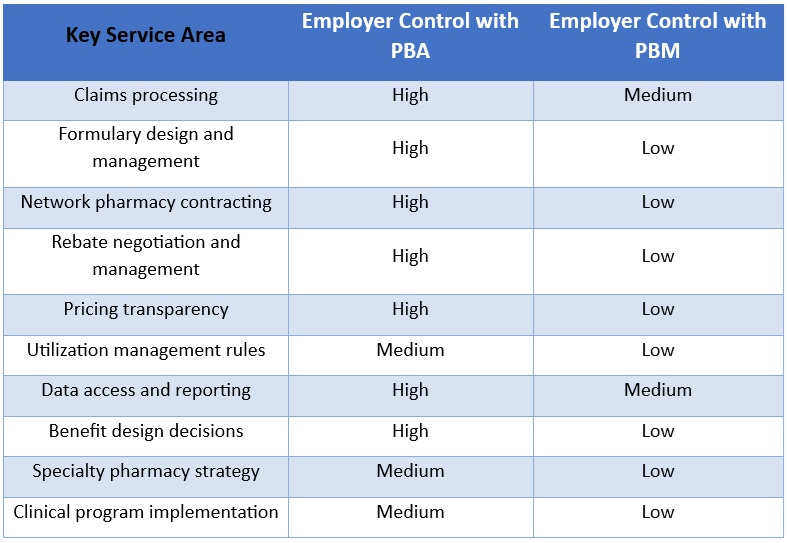
For many employers, brokers, and consultants, the distinction matters because it influences fiduciary risk, cost control, and member trust. A PBA offers clean operational execution with straightforward fees. A PBM offers full control over the drug benefit but can carry financial incentives that often run counter to the interests of the plan.
My take is simple. When cost, transparency, and accountability matter, a PBA or a fiduciary PBM model should be the starting point. If a PBM is used, the contract must eliminate hidden revenue, force full data access, and require meaningful audit rights. Without that structure, the plan will always choose the wrong path.
Author Bio
Tyrone Squires is Founder and Managing Director of TransparentRx, the first pharmacy benefit manager to operate under a true fiduciary standard of care. He trains benefit leaders across the country to manage pharmacy benefits in a way that delivers the outcomes their plans actually need. If you want help assessing where your plan stands, book a discovery call.