If a pharmacy benefit problem can materially affect spend in one month, waiting three months to review performance is already too late. A pharmacy benefits strategy does not end when the contract is signed, the formulary is selected or the savings projection is approved. That is when oversight begins, because without continuous monitoring in pharmacy benefits management , a plan can drift far from the financial and clinical results the employer expected before anyone notices.
Continuous monitoring is often referred to as ongoing monitoring, but I prefer the word continuous. Ongoing suggests something that happens regularly. Continuous suggests something more active, more deliberate and more urgent. In pharmacy benefits, where one claim, one drug or one missed decision can materially change plan performance, that distinction matters. Monitoring should not simply occur from time to time. It should be built into the way the benefit is managed.
A recent LinkedIn case study makes the point. A pharmacy benefits firm projected that it could reduce a client’s pharmacy spend by more than half. Eight months later, spending was essentially flat. The generic dispensing rate was on target and other management strategies were performing, but one medication, filled 19 times, represented 68% of the plan’s pharmacy spend. An international sourcing program had been identified during renewal as a way to lower the cost, but the employer did not elect it.
The lesson is not simply that employers need to understand which cost saving programs require an opt in. Eight months is far too long to discover that actual results are nowhere near the projection. Once the employer declined the program, the expected financial result changed and the impact should have been communicated immediately. After the first month of claims, the variance should have been visible again, giving the plan sponsor an opportunity to reconsider its decision before additional costs accumulated.
Monthly monitoring should be the standard
Quarterly business reviews have value, but they should not be the first time anyone looks closely at performance. Pharmacy claims move too quickly, and a single high cost prescription can materially change a plan’s results. Every self funded employer should receive a concise monthly performance report showing whether the plan is performing as expected, where results are moving off course and whether corrective action is needed.
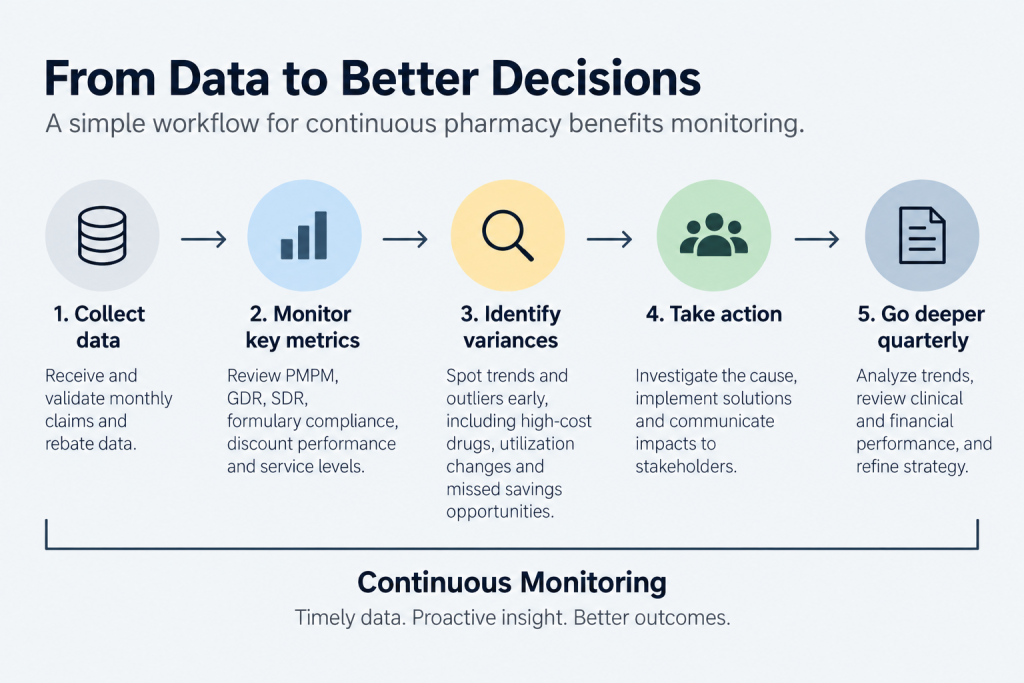
The purpose is not another 40 page report. A monthly review should answer a few basic questions: Are we performing as expected? If not, why? Does the plan sponsor need to make a decision? Does anything require action now? Those questions create an early warning system and establish accountability before a manageable problem becomes an expensive one.
If a savings strategy was not implemented, the financial impact should be visible. If specialty spend suddenly increases, the cause should be explained. If generic utilization slips, formulary leakage increases or contractual discounts miss expectations, the issue should not sit unnoticed until renewal. Fiduciary oversight requires more than receiving reports. Plan sponsors and their advisors need information they can use to verify performance and act while there is still time to change the outcome.
What should be monitored every month
The monthly scorecard should include both quantitative and qualitative measures. On the quantitative side, I would expect to see:
- PMPM cost
- Total cost of pharmacy care (TCoPC)
- Discount performance by channel
- Generic dispensing rate (GDR)
- Specialty dispensing rate (SDR)
- Formulary compliance rate
These measures provide a quick view of whether cost, utilization and plan design are working together as intended. PMPM identifies changes in overall pharmacy cost, while discount performance by channel helps expose underperformance that can disappear inside a blended result. GDR, SDR and formulary compliance show whether utilization is moving in the direction the employer intended.
Formulary compliance deserves particular attention. I prefer measuring nonformulary drug spend as a percentage of total net drug spend because a formulary has little financial value if exceptions and workarounds routinely allow higher cost drugs through. My working benchmark is 2% to 3% or less for paid nonformulary spend, with 3% to 5% deserving review and anything above 5% triggering a deeper audit. The goal is not a perfect number. The goal is to know when the formulary stops performing as designed.
Numbers do not tell the whole story
Service performance belongs on the monthly scorecard too. Two measures I would track are time to answer and first call resolution rate. Employers pay pharmacy benefit administrators and PBMs to solve problems, not simply process claims. Long hold times, repeated transfers and unresolved member issues create more work for HR teams while frustrating employees.
First call resolution matters because speed without resolution is meaningless. A call answered in 20 seconds is not impressive if the member has to call three more times. Qualitative monitoring should also surface recurring complaints, escalation themes, prior authorization delays, pharmacy access issues and problems that repeatedly reach the employer’s benefits team.
A strong pharmacy benefit partner should reduce the administrative burden on the employer, not push it back to HR. Service data can expose problems the claims file will never show. Reviewing financial, clinical and service performance together gives the plan sponsor a clearer picture of whether the benefit is working for both the plan and its members.
Quarterly reviews should go much deeper
Monthly monitoring is the dashboard. The quarterly review should go much deeper into what is driving the numbers, including top cost drugs and members, specialty trends, utilization changes, formulary exceptions, prior authorization activity, clinical program performance, discount guarantees, rebate performance and emerging therapies likely to affect future spend. The review should explain what happened, why it happened and what needs to change.
Actual performance should also be compared with the original financial projection, not just contractual guarantees. If the proposal projected a 30% reduction and the plan is tracking at 12%, the conversation should start there. What changed? Which assumptions were wrong? Which programs were not implemented? What can still be corrected? A meaningful quarterly review should answer those questions directly.
Every material variance should end with an owner, an action item and a date. Otherwise, the quarterly review becomes a presentation instead of an oversight process. The value comes from identifying what needs attention, deciding what happens next and assigning responsibility for follow through.
Eight months is too late
Pharmacy benefits are too complex and too expensive to manage by looking backward once or twice a year. Employers should know whether their strategy is working while there is still time to do something about it. Monthly monitoring catches problems early, while quarterly reviews provide the deeper analysis needed to correct course.
The case study is a useful reminder of what happens when monitoring comes too late. One medication accounted for 68% of spend, the expected savings never materialized and eight months passed before the financial impact was fully understood. The issue was not simply the drug or the program the employer declined. The larger failure was allowing the variance to persist without timely intervention.
For plan sponsors operating under a fiduciary standard of care, projected savings are not enough. Performance must be measured, material changes must be communicated and corrective action must follow when results fall short. Continuous monitoring is how employers move pharmacy benefits oversight from periodic reporting to documented accountability.