Self-funded employers often face a difficult tradeoff in pharmacy benefit management. They can reduce unnecessary pharmacy spend or limit member disruption. On the surface, avoiding disruption feels like the safer path. HR teams do not want employees frustrated at the pharmacy counter, calling about medication changes, or asking why a drug that worked yesterday now requires a different process today.
That concern is real. But it can also become expensive. In many pharmacy plans, meaningful savings are available through better formulary management, stronger utilization management, and a more disciplined approach to generic and therapeutic alternatives. The challenge is that those savings often require some level of change for a small portion of members.
The Concern: Member Disruption
When a plan moves from a loose formulary to a more carefully managed one, some members may be affected. A member may need to switch from a brand drug to a generic equivalent. Another may need to move to a lower-cost therapeutic alternative. Others may go through prior authorization, step therapy, or an exception review.
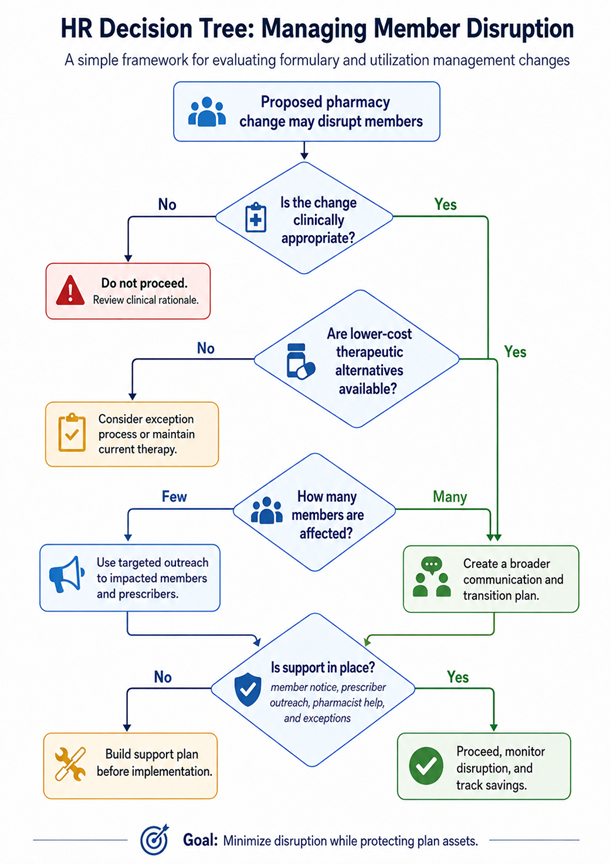
That creates anxiety for HR, and understandably so. HR teams often hear the complaints, even when the clinical and financial rationale is sound. No one wants a benefit change to feel like a takeaway, especially when employees are dealing with medications they rely on. But the question should not be, “Will there be any disruption?” A better question is, “Is the disruption clinically appropriate, financially justified, and properly supported?”
Reckless vs. Responsible Disruption
There is a big difference between reckless disruption and responsible disruption. Reckless disruption happens when members are forced through confusing changes without support, communication, or clinical review. That creates frustration and can harm trust. Responsible disruption looks different. It includes:
- Advance member notice before changes take effect
- Prescriber outreach when therapy changes may be needed
- Clear therapeutic alternatives when clinically appropriate
- Exception protocols for members with legitimate clinical needs
- Pharmacist support for members who need help navigating the change
That is not disruption for the sake of savings. That is fiduciary plan management.