Anyone can claim to be a PBM expert. Proving it is another matter. In pharmacy benefit management, expertise should be measured by more than a title, years in the business, or a polished sales presentation. Employers, consultants, and other plan fiduciaries need stronger evidence, especially when the financial and clinical stakes are so high. In my view, the hallmarks of a true PBM expert is demonstrated through a combination of:
- Education and formal training
- Applied experience
- Teaching
- Measurable results
A solid foundation of formal learning is one part of that equation. Certifications and structured training can help confirm that a person understands the core components of pharmacy benefit management, including formulary strategy, rebate structures, utilization management, contract terms, and compliance obligations. That matters. But education by itself does not make someone an expert. It simply establishes that the person has done the work to understand the fundamentals.
The next layer is the ability to communicate that knowledge clearly. Professionals who consistently publish articles, white papers, or practical commentary on PBM issues tend to separate themselves from those who rely on general claims. Writing well about complex topics requires more than familiarity. It requires command of the subject. The same is true for teaching. People who lead workshops, train advisors, or educate plan sponsors on how PBM contracts work often demonstrate a deeper level of mastery because they can translate technical material into practical guidance.
Operational experience is equally important. There is a meaningful difference between knowing how the system should work and understanding how it actually works in practice. Experience managing pharmacy programs, evaluating contracts, auditing claims, or overseeing benefit strategy gives professionals a more grounded view of where value is created and where cost leakage occurs. That kind of experience sharpens judgment in ways that theory alone cannot.
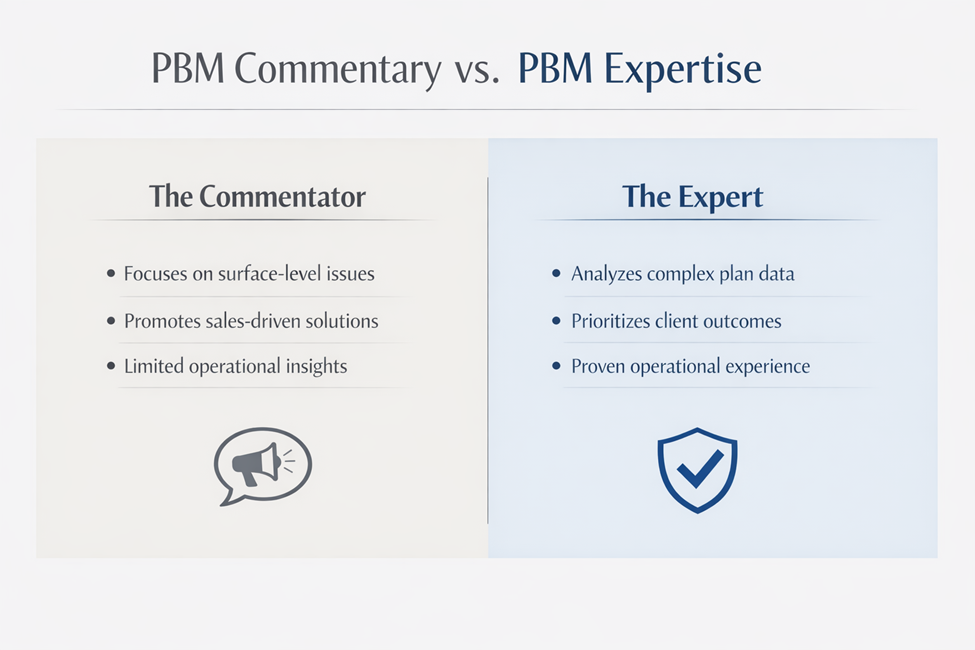
Still, the most persuasive evidence of PBM expertise is results. Can the individual point to examples where pharmacy spend was reduced without compromising care? Can they show how a plan sponsor improved contract performance, gained pricing clarity, or corrected misaligned incentives? Can they demonstrate that their recommendations produced measurable savings or better oversight? Those are the kinds of outcomes that move a person from knowledgeable to credible.
Recognition from outside the organization can add to that credibility. Media interviews, conference presentations, advisory roles, and industry invitations all help reinforce a professional reputation. But those signals should support the case, not define it.
For employers and consultants evaluating PBM expertise, the standard should be straightforward. Look for someone with formal training, a track record of educating others, practical operating experience, and documented outcomes. Most important, look for someone who understands the fiduciary implications of PBM decision-making and can connect strategy to accountability.
That is the real test. A PBM expert should not only understand the system. They should be able to explain it clearly, identify where it works against the plan sponsor, and recommend changes that improve financial performance and protect the employer’s interests. Anything less may be experience, but it is not expertise.
How We Can Work Together
Whether you’re a plan sponsor trying to get control of pharmacy spend, or a broker guiding clients through PBM decisions, education is the fastest way to improve outcomes. If you want a focused, high-value session your team can actually use, here are several ways we can work together.
Option 1: Get Certified
American College of Benefit Specialists (ACoBS) equips benefits professionals with practical knowledge across pharmacy, medical, retirement, and voluntary benefits. Organizations working with ACoBS-certified consultants gain better plan oversight, stronger vendor accountability, and more disciplined cost control. The certification signals a clear commitment to fiduciary guidance and protecting plan assets.
Option 2: Book a Webinar
A clean, educational session for employers, brokers, or TPAs. We’ll cover the most common PBM profit tactics, how to spot contract red flags, and what a fiduciary standard of care looks like in pharmacy benefits. Great for client education and thought leadership.
Option 3: Join the Virtual Roundtable
Bring your internal team (HR, Finance, and Benefits) or your broker group. I’ll lead a live discussion focused on PBM oversight, cost drivers, and what to ask your PBM right now. You’ll leave with a short action list you can use immediately.
Option 4: Get a Quote
Pharmacy benefits now rival medical spend for many plans. Yet most are still governed by contracts few have fully read and pricing models few can clearly explain. That is a fiduciary risk, not just a cost issue.
If you want lower spend, tighter oversight, and alignment you can defend in front of a board or audit committee, act with intent. Certify your team. Educate your clients. Pressure test your PBM. Run an RFP that exposes the full economics.