Transparency is becoming a legal requirement across pharmacy benefits. The Consolidated Appropriations Act, 2026 added federal PBM reporting obligations that take effect in later plan years.¹ Minnesota already requires specified disclosures to plan sponsors on request.² Requirements and effective dates vary, but the direction is clear. Employers are gaining rights to see more of how their benefits operate, and they need to consider what they can do with that information. Control is the new currency in pharmacy benefits management.
Disclosure alone does not guarantee a more valuable benefit. A report may help an employer identify a cost issue or understand a financial arrangement, but improvement still requires a decision and the ability to carry it out. Buyers need authority to evaluate alternatives, make changes, and hold their partners accountable. Transparency and control create the opportunity for better results when the employer understands the information and uses it.
A client recently selected us specifically because of the control our pharmacy benefits administration model would give them. That control became tangible when a copay waiver program came up as a possible addition to their benefit design. The client did not understand how the program worked, so it was explained. The final decision about whether to include it remained theirs.
The client’s selection connects control to purchasing value. They chose a model that preserved their authority, then encountered a decision where that authority mattered. The explanation supported their ability to evaluate the option, while the choice stayed with them. Employers should assess that combination when deciding what an arrangement is worth to their organization.
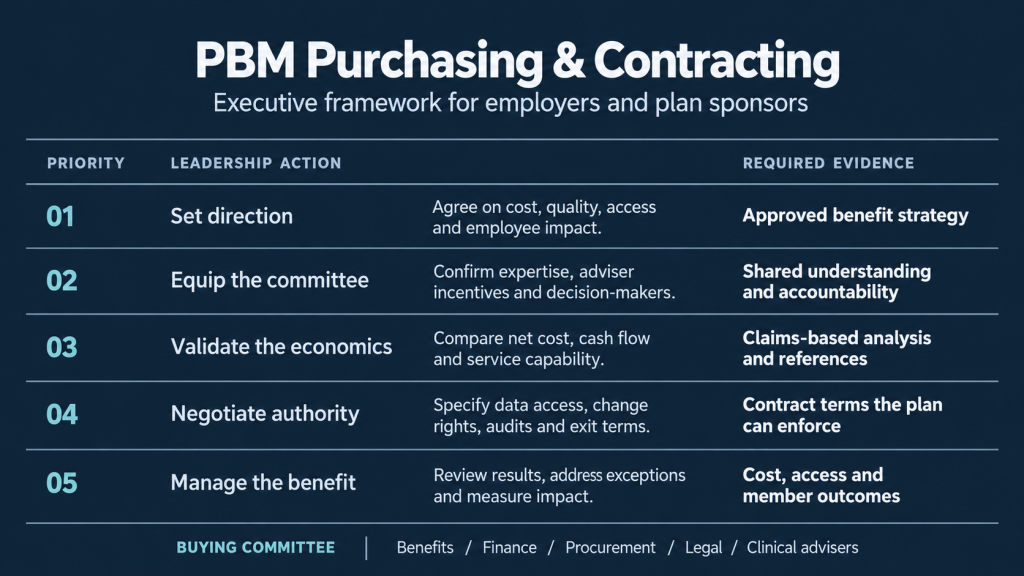
Control looks like having usable information and knowing which decisions the employer can make. It includes understanding how benefit changes affect costs, guarantees, and members, as well as being able to verify contractual performance and seek a remedy. Buyers should ask how a recommendation becomes an approved change and who has authority at each step. A transparent explanation becomes more useful when it supports a choice the employer can exercise.
The buying committee needs more than familiarity with PBM terminology to use that control. Finance should understand cost assumptions and cash flow, including payment and rebate timing. Benefits leaders should understand employee access and disruption, while procurement and legal connect commitments to contractual terms. Clinical advisers can evaluate treatment considerations. The committee should share enough knowledge to explain material tradeoffs and identify where further expertise is needed.
Securing control begins before selecting a vendor. Mark Cuban challenges the practice of announcing a winner before negotiating the contract.³ Megan Dorrell, PharmD, describes negotiating client-specific agreements before PBM selection.⁴ Their arguments put contract terms inside the competitive decision. Buyers can evaluate the proposed price alongside the rights that will govern the relationship, while alternatives remain available.
The National Alliance’s employer PBM playbook provides guidance on making those rights concrete.⁵ Employers should translate their priorities into requirements that bidders must address. Five areas deserve attention before selection:
- Usable information: Specify required claims data, disclosures, delivery timing, and access for independent advisers.
- Clear economics: Define pricing, fees, rebates, payment timing, and how guarantees will be measured.
- Decision authority: Establish which benefit changes the employer can make and their contractual consequences.
- Independent verification: Secure audit rights and remedies for identified shortfalls.
- Adaptability: Negotiate workable market checks and clear terms for changing services or ending the relationship.
The committee also needs to agree on what the benefit should accomplish. Priorities for cost, quality, access, and employee impact provide a basis for evaluating recommendations. Employers should assess their internal expertise and identify who will manage the arrangement after implementation. An adviser’s compensation, relevant relationships, and oversight responsibilities belong in that assessment.⁶
Finalists should demonstrate how the proposed arrangement would handle a real benefit decision. Ask how they would explain a program, provide supporting information, identify tradeoffs, and implement the employer’s choice. Determine whether the decision would affect pricing or guarantees and carry important commitments into the contract. The exercise should show whether the employer’s expected control will be usable.
Once those rights are secured, give someone responsibility for exercising them. Review spending, investigate access problems, and check performance against the agreement. When costs rise, examine whether price, drug mix, or utilization is driving the change before choosing a response. Evaluate approved changes against plan spending, employee costs, access, and treatment continuity.
As transparency becomes an expected part of the benefit, employers should examine the authority that accompanies it. Our client’s experience shows why decision ownership belongs in the purchasing conversation. Information helped the client evaluate a proposed program, and control preserved their choice. Better value comes from putting both to work and checking whether the decisions produce the results the benefit was designed to deliver.
Sources
- U.S. Government Publishing Office. Consolidated Appropriations Act, 2026, Section 6701.
- Minnesota Legislature. Section 62W.06, Pharmacy Benefit Manager Transparency.
- Mark Cuban. LinkedIn post on benefits procurement.
- Megan Dorrell, PharmD. LinkedIn post on negotiating PBM contracts before vendor selection.
- National Alliance of Healthcare Purchaser Coalitions. A Playbook for Employers: Addressing Pharmacy Benefit Management Misalignment.
- Supplied PBM purchasing and contracting framework.