PBM Agrees to Pay a Record $88.3 Million to Settle Ohio Case

The settlement is the first and largest in the country secured by a state attorney general against a pharmacy benefit manager (PBM). “Centene used sophisticated moves to bill unearned dollars – moves known only at the top levels of health care companies,” Yost said. “It has taken a huge effort by my team to untangle this scheme–and now that we know how it works, the alarm bells should be ringing for anyone using similar tactics.”
Centene Corp. (CNC) has agreed to pay Ohio $88.3 million to settle a lawsuit filed by Attorney General Dave Yost in March alleging the pharmacy benefit manager overbilled the Ohio Department of Medicaid for pharmacy services it provided. Yost also alleged Centene and its subsidiary, Buckeye Health Plan, conspired to misrepresent the costs of pharmacy services, including the price of prescription drugs.
Formula: True Cost of PBM Services

Most Ohioans’ prescription-drug plans are under the management of a PBM through their health insurance plans. PBMs are middlemen in control of prescription-drug costs, and they decide which prescription drugs are covered by health insurance companies.
Tyrone’s Commentary:
Well that didn’t take long for Centene to fold. Now that the cat is out of the bag, I wonder if commercial plan sponsors and their advisors will be as aggressive in eliminating overpayments to non-fiduciary PBMs? 

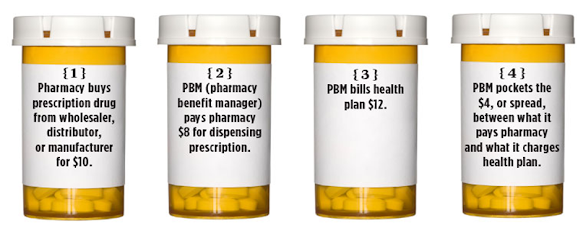
AG Yost began investigating PBMs in 2018 while state auditor. Yost found that PBMs, while managing the Department of Medicaid prescription drug program, were engaged in spread pricing, which is an artificial inflation of prescription drug pricing. That investigation found that PBMs collected more for drugs compared to the actual cost to dispense the drugs. With help from outside counsel, the Office of Attorney General Yost conducted a thorough investigation of these practices, finding significant breaches of contract.

Notably, the breaches include:

  • Filing reimbursement requests for amounts already paid by third parties.
  • Failing to accurately disclose to ODM the true cost of pharmacy services, including the disclosure of discounts received.
  • Artificially inflating dispensing fees.

Continue Reading >>

Tuesday Tip of the Week: Commercial Employers Pay More Than Public Sector Employers in Spread Pricing

Are you able to spot the areas non-fiduciary Pharmacy Benefit Managers hide cash flow from self-insured employers?

Here are just three areas traditional PBMs hide cash flow from unsuspecting third-party payers.  A third-party payer may include an employer, insurer, HMO, union and others. 
1.  Contractual Relationship – this is #1 because it permits or makes possible revenue to the PBM that is not transparent. Fee-for-service, shared [risk] savings and capitated contracts often lead to excessive overpayments.   
2.  Share of Rebates –  often times the share is too low.  Payers should receive 100% of all rebates and/or any incentives earned due to their prescription drug purchases. Typically, rebate payments amount to $2.00 – $3.00 per script.  
3.  Ingredient Costs – in many cases the amount is too high.  A payer should always remunerate to the PBM the exact amount reimbursed to network pharmacies for the same dispensed prescription medication(s).  A difference in these payments is referred to as a spread. It is not uncommon for non-fiduciary PBMs to achieve spreads as high as $50 on a single prescription from commercial employers. The state of Ohio is suing a PBM for spreads averaging just $5.71. 
I won’t waste time discussing transparent and/or pass-through pharmacy benefit managers because all PBMs will communicate in one way or another that they’re fully transparent and pass-through. Not that they’re wrong, but it depends upon how one defines transparency. The definition is ambiguous at best. However, there is no ambiguity in the definition for fiduciary.
For clarification purposes, I must distinguish between traditional and fiduciary pharmacy benefit managers. It is simple; a fiduciary PBM must [legally] put its clients’ interest before their own and a traditional PBM does not. 
If your PBM promises full transparency and pass-through yet has not agreed to a fiduciary standard request they put the pen where their mouth is.  If your PBM resists ask yourself, “what are they hiding?” You now know at least part of the answer.

Tuesday Tip of the Week: Institute new contract terms that do not permit spread pricing

Ohio Attorney General Dave Yost is going after another pharmacy benefit manager in court, alleging Express Scripts overcharged the Ohio Highway Patrol Retirement System, a public pension fund, and “pocketed millions.”
 
The lawsuit alleges multiple contract breaches by Express Scripts:
 
1) Failure to honor pricing discounts
2) Classifying generic drugs as brand name to charge higher rates 
3) Overcharging for generic drugs 
 
Express Scripts, now owned by Cigna, declined to comment. Yost said Express Scripts “egregiously charged for services it didn’t deliver,” costing Ohioans millions, according to a statement released Monday. “We want our money back,” he added.
How spread pricing works – Click to eliminate


Ohio has put PBM business practices under scrutiny, leading the state to end the practice of spread pricing, a tactic that has become increasingly controversial. State lawmakers also mandated that the state move to one single PBM as an attempt to better safeguard state dollars, but it has yet to happen.


The lawsuit is another step in pushing for more PBM transparency in Ohio. “It’s no secret that PBMs have been keeping secret their prescription pricing in order to evade public scrutiny and rake in revenue,” Yost said in a statement.